Short answer
PEBA is TPU's springy relative. If the part will be flexed again and again and needs to spring back quickly, choose PEBA. For most soft parts TPU is enough, and it is cheaper.
What is PEBA? Quick answer
PEBA (polyether block amide) is an engineering elastomer. It is soft and flexible like TPU (see What is TPU?), but it springs back faster, is lighter and keeps its properties better in the cold. It is used where a part has to flex many times without wearing out.
Soft and springy
Engineering elastomer
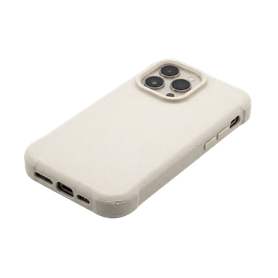
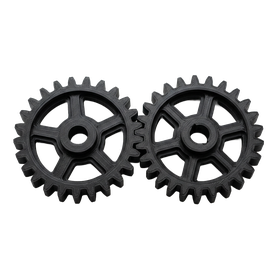
Best for: Soles, cushioning parts, springy clips & sports equipment
- Springs back faster than TPU
- Lighter than TPU
- Keeps its properties better in the cold
- Withstands repeated flexing
More expensive and requires patience
Slow printing, preferably a direct drive extruder
Less suitable for: Bowden printers & parts where TPU is already enough
- Costs more than TPU
- Print slowly, reduce the speed substantially
- A direct drive extruder helps a lot
- Keep the filament dry
Rule of thumb: Will the part be flexed again and again and need to spring back quickly? Choose PEBA. Otherwise TPU is enough.
Advantages and what to keep in mind
Springs back faster. Returns to its shape faster than TPU, which shows in parts that are compressed or flexed often.
Lighter. Lower weight than TPU, which helps for soles, cushioning and sports equipment.
Keeps its properties in the cold. Holds its properties better than TPU when it gets cold.
Costs more than TPU. TPU is cheaper and is enough for most soft parts, so PEBA is the choice for when the flexing and the spring-back really matter.
PEBA in practice
PEBA is printed at 220–250 °C with a bed temperature of 30–50 °C. Reduce the speed substantially compared with rigid materials. Soft filaments easily jam in Bowden feeding, so a direct drive extruder helps a lot. Print slowly and turn retraction off or reduce it sharply. The basics of soft filament are described in Printing TPU.
Our own test print is a Benchy on a Bambu Lab P1S with a 0.6 mm nozzle and 0.3 mm layer height. It was printed at 240 °C with a flow ratio of 0.98, a maximum flow of 12 mm³/s, 40 mm/s on the outer wall and 0.4 mm retraction. You can download the file on the PEBA page.
Store the filament dry, in its packaging with desiccant or in an airtight box, protected from direct sunlight. If the spool has absorbed moisture, you will find the method in Drying filament. Make sure there is good ventilation where the printer stands, and do not touch the nozzle or bed during or straight after printing.
Technical data
The table shows the guideline values we give for PEBA, with TPU for comparison. Start in the middle of the range and adjust to your printer.
We have no measured values of our own for PEBA's hardness or tensile strength, so we only show the values we can stand behind. TPU's values are in What is TPU?.
When should you choose PEBA?
Our PEBA filament is available in 2 shades. If you are unsure which soft material you need, you can start with What is TPU?.
→ Choose PEBA
When the part will be flexed many times and needs to spring back quickly: soles, cushioning parts, springy clips and sports equipment. Provided you have a printer with a direct drive extruder.
→ Choose something else
For ordinary soft parts, TPU is cheaper and is enough. If you need rigid parts, choose PETG or PLA, and if you have a Bowden printer, TPU or a more rigid material is easier to work with.
Frequently asked questions about PEBA
How does PEBA differ from TPU?
PEBA springs back faster and is lighter than TPU, and keeps its properties better in the cold. TPU is cheaper and is enough for most soft parts. Choose PEBA when the part will be flexed again and again.
Do I need a special printer for PEBA?
A direct drive extruder helps a lot. With Bowden feeding, soft filaments easily jam. Print slowly and turn retraction off or reduce it sharply.
What temperature should PEBA be printed at?
We give 220–250 °C for the nozzle and 30–50 °C for the bed. Start in the middle of the range and adjust to your printer. Reduce the speed substantially compared with rigid materials.
Is PEBA difficult to print?
It is more demanding than PLA and PETG, about the same as TPU. With a slow speed and preferably a direct drive extruder, the result is good. Keep the filament dry.
PEBA in 2 shades, from 369 SEK
Every colour test printed, vacuum packed with a silica gel pouch and shipped from Tibro within 48 hours.