Short answer
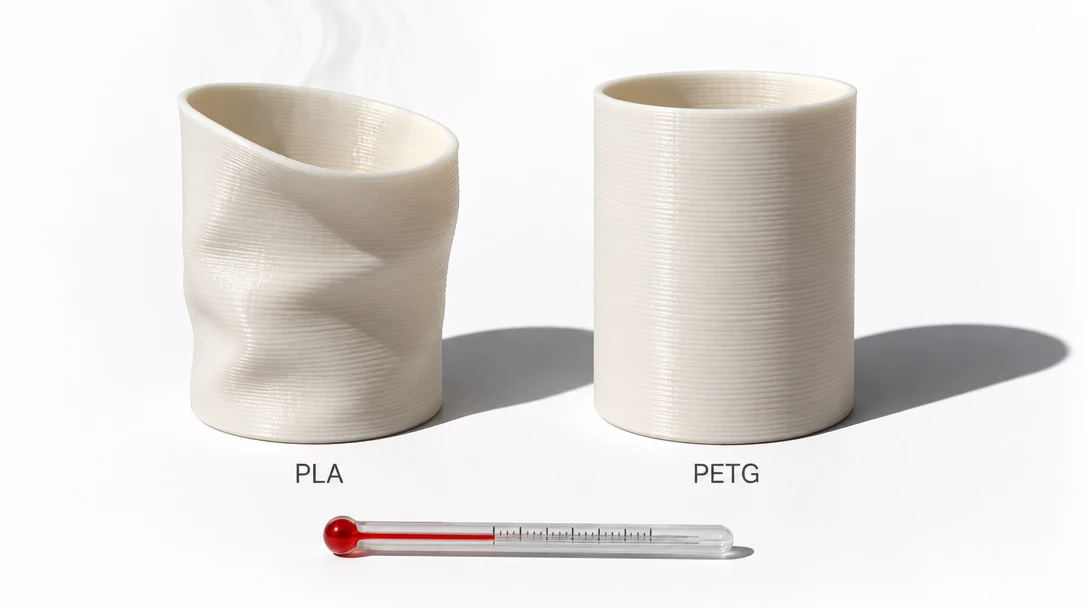
Does the part need to be soft, bendable or shock-absorbing? Then TPU is the right choice. If the part instead needs to be stiff and keep its shape, choose a hard material such as PLA, PETG or ABS.
What TPU is
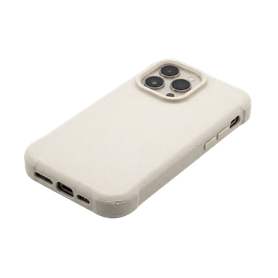
TPU (thermoplastic polyurethane) is a flexible filament with rubber-like elasticity. It is resistant to abrasion and impact, which makes it perfect for parts that need to bend, be compressed or withstand knocks, such as phone cases, seals and wearable products.
Flexible & tough
Thermoplastic polyurethane
Best for: Cases, seals, wheels & flexible parts
- Rubber-like elasticity
- Very impact- and abrasion-resistant
- Bends without breaking
- Good grip and damping
Likes to be printed slowly
Soft material
Less suitable for: Stiff parts & very high speeds
- Printed slowly (30–60 mm/s)
- A direct drive extruder handles it best
- Not for stiff, dimensionally stable parts
- Requires a little patience
Flexible and tough
The material does want to be printed slowly (30–60 mm/s) and is best handled by a printer with a direct drive extruder. It is not the right choice for stiff, dimensionally stable parts, and it takes a little more patience than hard materials.
Rubber-like elasticity. Bends without breaking and springs back to shape.
Very resistant to impact and abrasion. Handles hard use better than stiff materials.
Good grip and damping. Suits handles, wheels and shock-absorbing parts.
Suits wearable products. Cases, seals and gaskets that need to withstand being flexed over and over.
Printing and feeding
TPU prints at 200–230 °C with a bed temperature between 25 and 75 °C depending on the variant. The most important thing is speed. Because the material is soft, it wants to be fed slowly and evenly, ideally 30–60 mm/s, otherwise the filament can buckle in the feed. A printer with a direct drive extruder handles TPU best, but it also works on Bowden printers at a somewhat lower pace. We go through feeding and settings step by step in How to print TPU.
If you take it slowly, you get tough, flexible parts that can be bent over and over again without cracking.
Flexibility and durability
According to our data sheets, TPU has an elongation at break of a full 400 per cent, which says something about how far the material can stretch before it breaks. The hardness is given as 95A on the Shore scale, a measure used for soft materials. The result is parts that are tough, abrasion-resistant and good at absorbing impacts. If you need something a little harder and stiffer, there is TPU 70D, a stiffer variant that gives up some flexibility for better wear resistance.
What is TPU good for?
Anything that benefits from being soft or flexible. Phone cases, seals, gaskets, wheels and tyres for models, handles with good grip and wearable products. Where hard materials crack, TPU bends and springs back.
Technical data
The table summarises the key figures from our data sheets. Exact values may vary slightly between colours and variants.
When should you choose TPU?
Vårt TPU-filament finns som klassisk variant, transparent och som den stelare TPU 70D, till ett lika förmånligt pris som resten av sortimentet. Är du ny på 3D-utskrift kan det vara värt att börja med de enklare materialen, läs gärna PLA or PETG?
→ Choose TPU
When the part needs to be soft, flexible or shock-absorbing and withstand hard use. Phone cases, seals, gaskets, wheels, grips and wearable products.
→ Choose something else
If the part needs to be stiff and dimensionally stable, choose a hard material. PLA for simple prints and details, PETG for functional parts, ABS or ASA when it needs to withstand heat.
Frequently asked questions about TPU
Is TPU difficult to print?
It is more demanding than hard materials, mainly because the soft filament wants to be fed slowly and evenly. At a low speed (30–60 mm/s), and ideally with a direct drive printer, the result is reliable though.
Do I need a direct drive extruder for TPU?
It is preferable, as a direct drive extruder gives better control of the soft filament. It also works on Bowden printers, but then you should lower the speed further.
How flexible is TPU?
Very. According to our data sheets the elongation at break is 400 per cent, and the hardness is given as 95A on the Shore scale. The material bends and springs back without being damaged. If you want something stiffer, there is TPU 70D.
What is the difference between TPU and TPU 70D?
TPU 70D is a harder, stiffer version. It gives up some flexibility for improved wear resistance and strength, which makes it suitable for technical applications where you want a little less give.
TPU in 8 shades, from 240 SEK
Varje färg provtryckt, vakuumpackad med silikagelpåse och skickad från Tibro inom 48 timmar.