Short answer
Want a functional part without the hassle? Choose PETG. Does the part need to withstand real heat and hard use, and do you have a printer with a heated bed? Then ABS is worth the effort.
PETG or ABS: the short answer
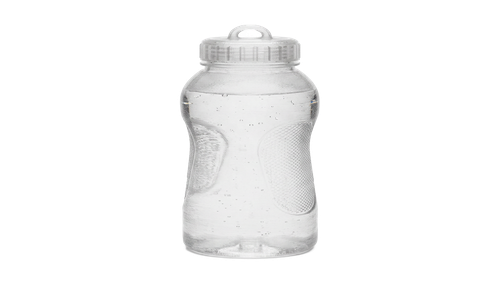
Choosing between PETG and ABS is about how much you want to struggle with the print versus how much heat the part has to withstand. PETG is considerably easier to print, resists moisture and chemicals and needs no enclosure. ABS withstands higher temperatures and can be finished, but warps easily and wants an enclosed printer.
Easy & tough
Polyethylene terephthalate glycol
Best for: Functional parts, brackets, outdoors & liquids
- Much easier to print
- Resists moisture and chemicals
- No enclosure required
- Good UV and weather resistance
Heat-resistant & tough
Acrylonitrile butadiene styrene
Best for: Parts in heat, housings & mechanical parts
- Withstands higher temperatures
- Very impact-resistant and tough
- Can be sanded and post-processed
- Proven in industry
Rule of thumb: Want a functional part without the hassle? Choose PETG. Does the part need to withstand real heat and hard use, and do you have a printer with a heated bed? Then ABS is worth the effort.
The two at a glance
PETG — easy & tough. Best for functional parts, brackets, outdoors and liquids: much easier to print, resists moisture and chemicals, no enclosure required, good UV and weather resistance.
ABS — heat-resistant & tough. Best for parts in heat, housings and mechanical parts: withstands higher temperatures, very impact-resistant and tough, can be sanded and finished, proven in industry.
Properties compared
The table summarises the key figures from our data sheets. The clearest pattern: PETG is easier and handles moisture, ABS handles heat and impact better.
The differences in practice
Here the difference is big. PETG prints at 220–255 °C with a bed temperature of 50–70 °C and needs no enclosed printer. It shrinks little and sticks well, so it is forgiving once you have found the right settings. ABS prints hotter, at 230–260 °C with a bed at 90–110 °C, and shrinks more as it cools. That shrinkage makes ABS prone to warping, especially on large parts, and the material therefore does best in an enclosed print chamber that keeps the heat even. If you want to read more about how to avoid that, see our guide How to print ABS.
In tensile strength they are close (PETG 53 MPa, ABS 60 MPa according to our data sheets), but the character differs. The elongation at break is almost the same, 34 percent for ABS and 31 percent for PETG, so both handle impacts well. ABS also withstands higher temperatures in the finished part, so for something that gets hot, ABS is the safer choice. PETG, for its part, resists moisture and chemicals better and copes well with outdoor use, while ABS prefers to be indoors. If you want to dig deeper into one of the materials, we have separate guides on PETG and ABS.
Which should you choose?
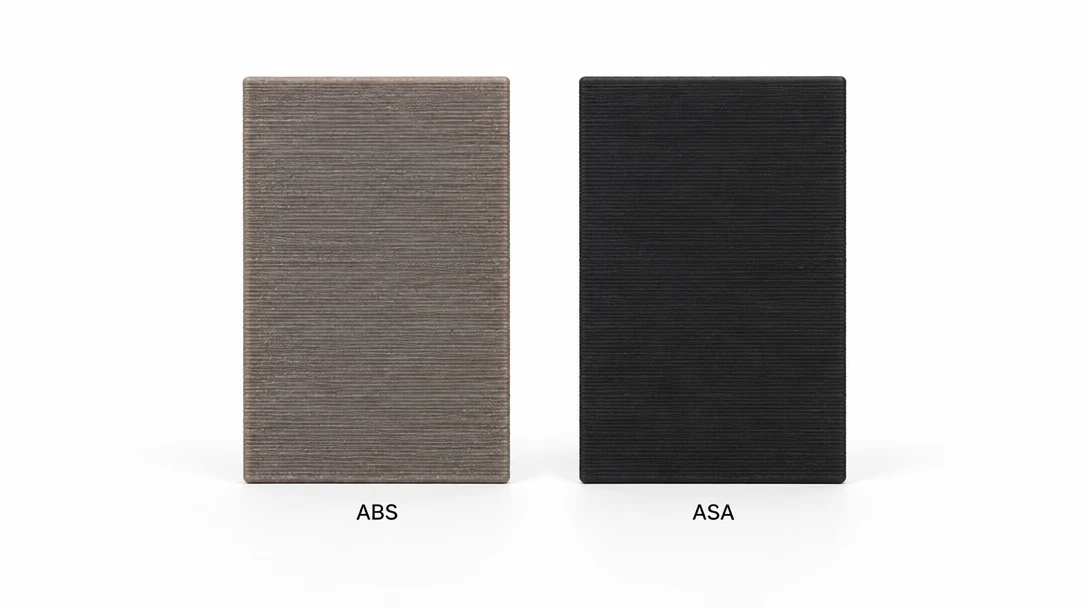
If the part will also be outdoors in sun and weather, ASA is worth a look, since it adds UV and weather resistance to ABS's properties. Otherwise you will find both our PETG filament and ABS filament in many colours at low prices per kilo.
→ Choose PETG
When you want a functional part without the hassle: brackets, holders, lids, bottles and parts exposed to moisture or kept outdoors. No need for an enclosure.
→ Choose ABS
When the part needs to withstand heat and heavy use: housings, mechanical parts and components near heat sources. Provided you have a printer with a heated bed, and preferably an enclosure.
Frequently asked questions about PETG and ABS
Is ABS stronger than PETG?
In pure tensile strength they are close (PETG 53 MPa, ABS 60 MPa according to our data sheets), and the elongation at break is almost the same (PETG 31 %, ABS 34 %). ABS is slightly higher on both, but for most functional parts PETG is more than enough.
Which is easiest to print?
PETG, by a good margin. It doesn't need an enclosure and warps less. ABS prints hotter, shrinks more and warps more easily, so it does best in an enclosed printer.
Which handles heat better, PETG or ABS?
ABS. It prints hotter and generally withstands higher temperatures in the finished part, which makes it better suited to parts exposed to heat. For outdoor use with UV resistance, though, ASA is an even better choice.
Which is best for outdoor use?
PETG of the two, thanks to its moisture and weather resistance. ABS breaks down faster in the sun. If you want the best outdoor material, ASA is the first choice.
Filament in 173+ shades, from 115 SEK
Varje färg provtryckt, vakuumpackad med silikagelpåse och skickad från Tibro inom 48 timmar.