Short answer
Will the part be outdoors, withstanding sun, rain and temperature swings? Then ASA is the obvious choice. If the part does not need to be outside, ABS can do the same job, and if you want the easiest possible print, choose PLA.
What is ASA? The short answer
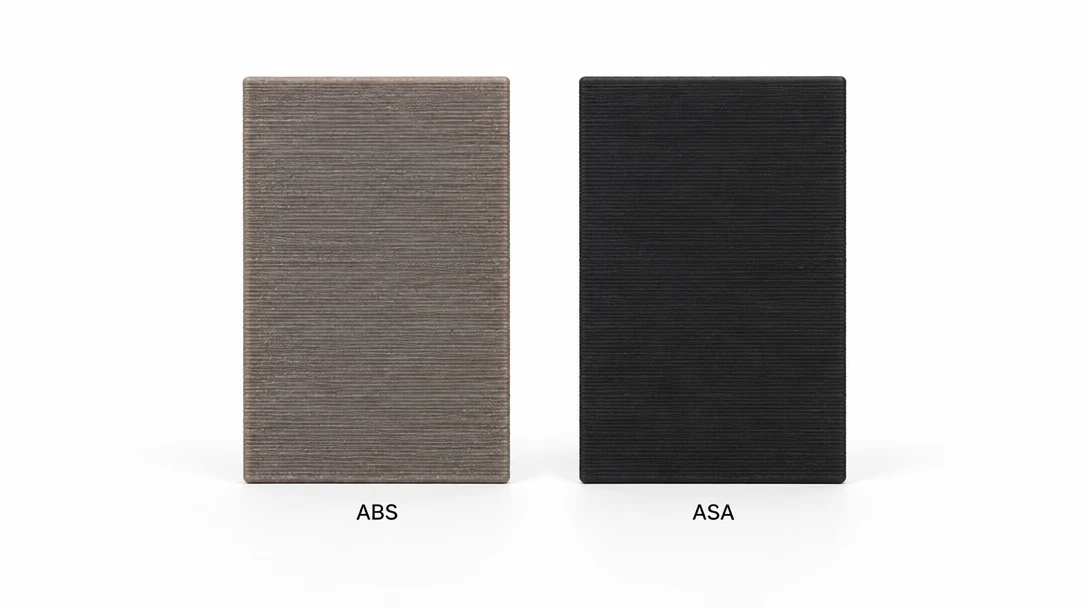
ASA (acrylic styrene acrylonitrile) is a strong, durable filament similar to ABS but with better UV and weather resistance (see ASA vs ABS). It is the first choice for parts that will be outdoors, where colour and strength need to last over time.
Weather- & UV-resistant
Acrylic styrene acrylonitrile
Best for: Outdoor parts, signs & durable functional parts
- Very good UV and weather resistance
- Strong and durable
- Keeps its colour outdoors
- Handles heat well
Needs the right conditions
Heated bed & enclosure
Less suited to: Beginners & open printers in draughty rooms
- Warps like ABS
- Needs a bed at around 90–110 °C
- Benefits from an enclosed space
- Good ventilation recommended
Rule of thumb: Will the part be outdoors, withstanding sun, rain and temperature swings? Then ASA is the obvious choice. If the part does not need to be outside, ABS can do the same job, and if you want the easiest possible print, choose PLA.
Advantages and what to bear in mind
Very good UV and weather resistance. Keeps its colour outdoors and handles heat well.
Strong and durable. Tough and resistant to impact.
Warps like ABS. Needs a bed at around 90–110 °C and does well in an enclosure. Good ventilation is recommended.
ASA in practice
ASA is printed at 230–265 °C with a bed temperature of 90–110 °C. Just like ABS, ASA shrinks as it cools and can warp, so an enclosure that keeps the heat even is a big advantage. Keep the speed moderate, around 35–70 mm/s, for the best layer adhesion. Good ventilation is recommended while printing. You will find all the settings step by step in How to print ASA.
The reward is parts that thrive outdoors. Where PLA softens in the sun and colours can fade, ASA keeps both its shape and its colour season after season.
According to our data sheets, ASA has a tensile strength of 47.1 MPa and an elongation at break of 25 percent, which makes the material tough and resistant to impact. The density is low, at 1.07 g/cm³. This combination of toughness and weather resistance is what makes ASA a reliable choice for demanding outdoor environments.
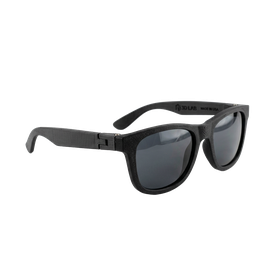
This is where ASA really stands out. The material withstands UV light and weather considerably better than most other filaments, which makes it ideal for signs, holders, brackets and parts that will sit outdoors all year round. If you want even more stiffness, ASA is also available as a carbon fibre variant, which combines weather resistance with the strength of carbon fibre.
Technical data
The table summarises the key figures from our data sheets, with PLA as the reference. Exact values may vary slightly between colours and variants.
When should you choose ASA?
Vårt ASA filament finns både som klassisk variant och som carbon fiber, till ett lika förmånligt pris som resten av sortimentet. Är du osäker på skillnaden mot de enklare materialen kan du läsa PLA vs PETG.
→ Choose ASA
When the part will sit outdoors and withstand sun, rain and temperature swings without fading or weakening. Signs, holders, brackets and outdoor parts. Provided you have a printer with a heated bed.
→ Choose something else
If the part will not be outdoors, ABS does the same job. If you want the easiest possible print, choose PLA, and if you need moisture and chemical resistance without an enclosure, PETG is easier to work with.
Frequently asked questions about ASA
What is the difference between ASA and ABS?
They are closely related and have similar strength and heat resistance, but ASA has clearly better UV and weather resistance. For parts that will sit outdoors ASA is the better choice, while ABS works very well indoors.
Can ASA stay outdoors all year round?
Yes. ASA is developed specifically for outdoor use and keeps both its shape and colour when exposed to sun and weather, where many other materials fade or soften over time.
Do I need an enclosed printer for ASA?
It is recommended. Like ABS, ASA shrinks as it cools and can warp, and an enclosed print chamber that keeps the heat even gives a considerably more reliable result. Good ventilation is also preferable.
Is ASA difficult to print?
It is more demanding than PLA and PETG, mainly because of the warping. With a hot bed (90–110 °C), moderate speed and preferably an enclosure, however, the result is reliable.
ASA in 5 shades, from 190 SEK
Varje färg provtryckt, vakuumpackad med silikagelpåse och skickad från Tibro inom 48 timmar.