Short answer
If it should look good and be easy, choose PLA. If it should be functional and withstand moisture and impacts, choose PETG. If it should withstand heat and heavy use, and you have a printer with a heated bed, choose ABS.
PLA, PETG or ABS: the short answer
The three most common filaments cover almost everything you want to print. PLA is the easiest and best-looking, PETG is the functional all-rounder, and ABS is the tough, heat-resistant material for demanding parts. This guide helps you choose the right one. All temperatures come from our own data sheets.
Easy & detailed
Polylactic acid
Best for: Figures, prototypes, decor & beginners
- Easiest to print
- Sharpest detail
- Low warping
Strong & functional
Polyethylene terephthalate glycol
Best for: Functional parts, mounts & technical parts
- Impact-resistant & tough
- Resists moisture & chemicals
- No enclosure required
Rule of thumb: If it should look good and be easy, choose PLA. If it should be functional and withstand moisture and impacts, choose PETG. If it should withstand heat and heavy use, and you have a printer with a heated bed, choose ABS.
The three at a glance
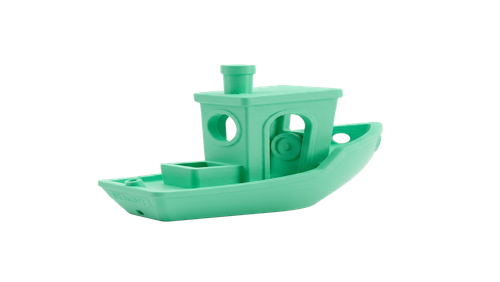
PLA — easy & detailed. Best for figurines, prototypes, decoration and beginners: easiest to print, sharpest detail, low warping.
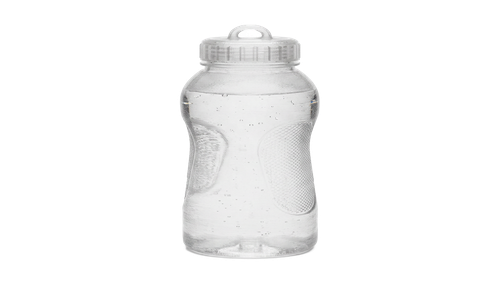
PETG — strong & functional. Best for functional parts, brackets and technical parts: impact-resistant and tough, resists moisture and chemicals, no enclosure required.
ABS — tough & heat-resistant. Best for parts that need to withstand heat and heavy use: housings, brackets and parts near heat sources. Impact-resistant and can be post-processed, but wants a heated bed and preferably an enclosed printer.
Properties compared
The table summarises the key figures from our data sheets. The clearest pattern: ease of printing falls and heat resistance rises as you go from PLA to PETG to ABS.
The differences in practice
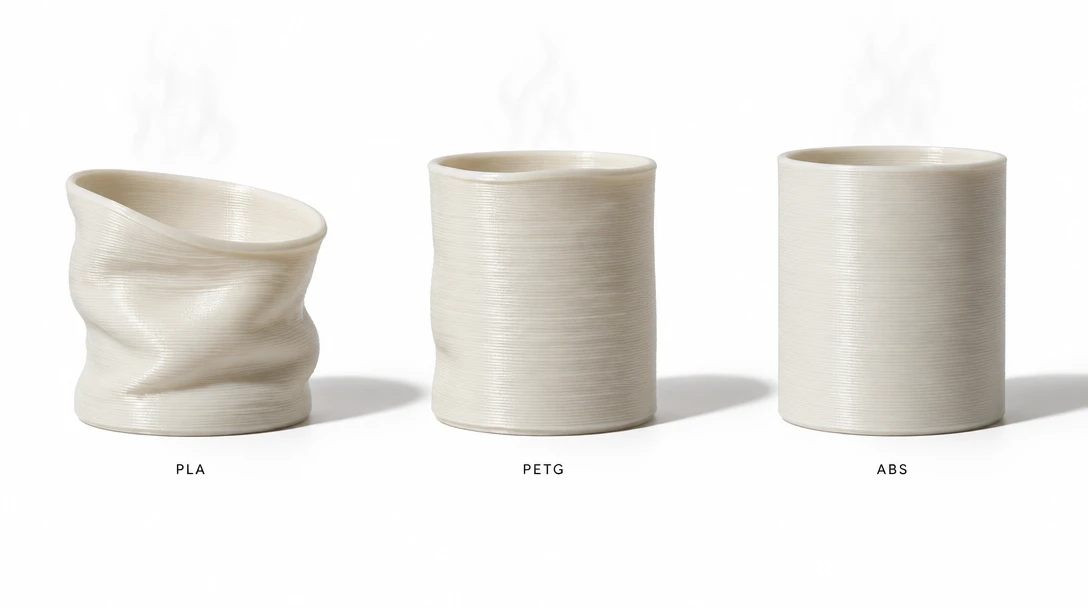
PLA is the easiest and works on practically any printer with standard settings. PETG takes a bit more feel, but doesn't need an enclosure. ABS is the most demanding: it warps easily and does best in an enclosed printer with a heated bed. The order is clear: PLA, then PETG, then ABS. If the choice is between the two most common, we go through it step by step in PLA vs PETG.
In pure tensile strength all three are close to each other (PLA 63 MPa, ABS 60, PETG 53 according to our data sheets). The difference is in character. PLA is stiff but more brittle, while PETG and ABS are tougher and handle impacts better. ABS has the highest elongation at break, 34 per cent, closely followed by PETG at 31 per cent. If you are weighing just these two against each other, we go deeper in PETG vs ABS.
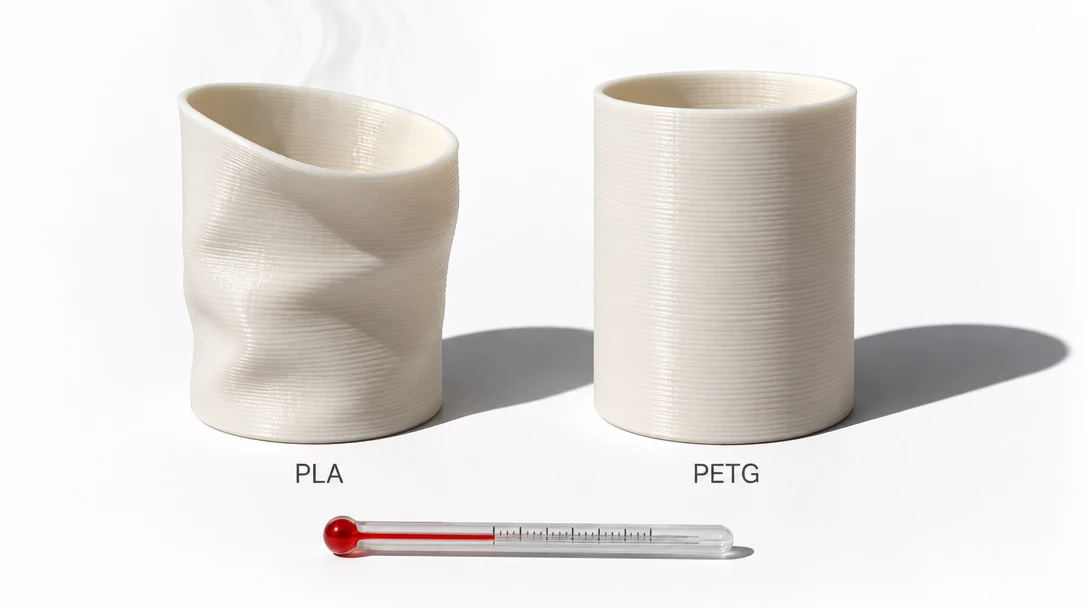
This is ABS's big advantage. It withstands higher temperatures than both PLA and PETG, which makes it suitable for parts in hot environments, for example in a car or near electronics. PLA softens first, with PETG in between. If the part will be outdoors, ASA is also worth a look, since it adds UV and weather resistance to ABS's properties (see ASA vs ABS).
Which should you choose?
For parts that need to withstand heat and heavy use, provided you have a printer with a heated bed and preferably an enclosure, ABS is better suited: housings, brackets and parts near heat sources. Read more in What is PLA?, What is PETG? and What is ABS?
→ Choose PLA
The easiest possible print, sharp detail and low warping. Figurines, models, prototypes and decoration. The obvious beginner choice.
→ Choose PETG
Functional parts that need to withstand moisture, chemicals and impacts, without the hassle of an enclosure. Brackets, holders, lids and technical parts.
Frequently asked questions about PLA, PETG and ABS
Which is the strongest of PLA, PETG and ABS?
In pure tensile strength they are close (PLA 63 MPa, ABS 60, PETG 53 according to our data sheets). But ABS is the toughest, with 34 per cent elongation at break, which makes it the most impact-resistant. PLA is the stiffest but the most brittle.
Which is easiest to print?
PLA, by a good margin. PETG is moderately difficult but doesn't need an enclosure. ABS is the most demanding because it warps and does best in an enclosed printer.
Which handles heat best?
ABS. It prints the hottest and withstands higher temperatures in the finished part than both PLA and PETG. For outdoor use with UV resistance, ASA is an even better choice.
Which should a beginner start with?
PLA. It is forgiving, warps minimally and works on almost any printer with standard settings. PETG is a natural next step when you want more functional parts.
Filament in 173+ shades, from 115 SEK
Varje färg provtryckt, vakuumpackad med silikagelpåse och skickad från Tibro inom 48 timmar.